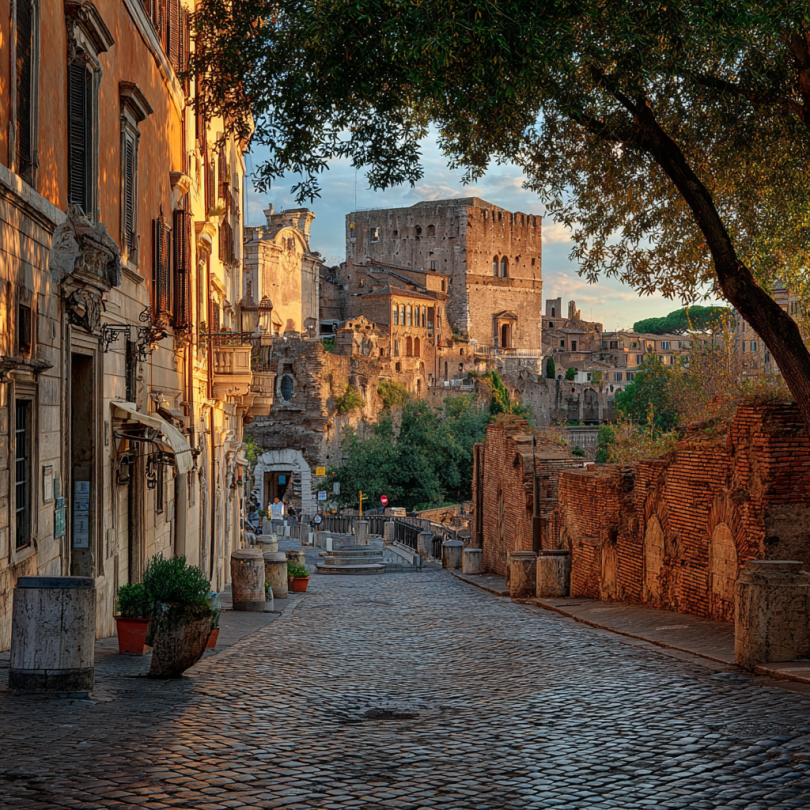
Morning: Ancient Ruins and Morning Espresso
Colosseum & Roman Forum
Start early at the Colosseum to avoid crowds.
Book tickets online in advance; consider a guided tour for historical context.
Walk around and inside the amphitheater — imagine gladiators, roaring crowds, and the grandeur of Roman engineering.
Next, wander the Roman Forum, the heart of ancient Rome.
See Temples of Saturn and Vesta, Arch of Titus, and Palatine Hill.
Take time to absorb the ruins; Rome’s history unfolds in layers, and rushing diminishes the experience.
Tourist Mistake Alert: Underestimating the size of the Forum. Wear comfortable shoes and give yourself 1–2 hours.
Espresso Break
Stop at a nearby caffè for an espresso or cappuccino.
Romans usually drink espresso standing at the bar — quick, strong, and ritualistic.
Pair it with a cornetto (Italian pastry) if you want a light snack.
Midday: Piazza Life and Hidden Gems
Piazza Navona & Pantheon
Stroll to Piazza Navona with its fountains, street performers, and lively cafés.
Walk to the Pantheon, one of the best-preserved ancient buildings in Rome.
Grab a gelato from a nearby gelateria — a sweet pick-me-up before more walking.
Hidden Gems
Small side streets often reveal charming shops, artisan workshops, and tiny trattorias.
Visit Campo de’ Fiori market for fresh produce, flowers, and vibrant local life.
Quick Tip: Keep an eye out for cobblestones — Rome’s streets are beautiful but uneven.
Afternoon: Vatican or Trastevere Detour
Option 1: Vatican City
St. Peter’s Basilica: Marvel at Michelangelo’s Pietà and the dome.
Vatican Museums & Sistine Chapel: Book timed tickets to avoid lines.
Don’t rush — even a quick visit takes 2–3 hours.
Option 2: Trastevere Neighborhood
Quaint streets, ivy-covered buildings, and hidden squares.
Stop at a local café for a spritz or an afternoon espresso.
Explore Santa Maria in Trastevere, a stunning church with golden mosaics.
Tourist Mistake Alert: Trying to see both Vatican and Trastevere in one afternoon — choose one to enjoy it properly.
Evening: Dinner and Roman Nightlife
Traditional Roman Dinner
Head to a trattoria for Roman classics:
Cacio e pepe: Pasta with pecorino and black pepper.
Carbonara: Pasta with eggs, pecorino, and guanciale.
Saltimbocca alla Romana: Veal with prosciutto and sage.
Pair with local wine or a cold Peroni beer.
Nighttime Strolls
Walk to Piazza Venezia or Trevi Fountain to see landmarks illuminated.
Throw a coin into Trevi Fountain for luck and enjoy the atmosphere.
Small piazzas in Monti or Campo de’ Fiori offer quiet charm away from crowds.
Rome Footsteps: Suggested Itinerary
Morning: Colosseum → Roman Forum → Espresso break.
Midday: Piazza Navona → Pantheon → Campo de’ Fiori market.
Afternoon: Vatican City (St. Peter’s, Museums) OR Trastevere stroll.
Evening: Dinner at a local trattoria → Trevi Fountain / Monti walk → Night gelato.
Alternative Options:
Spanish Steps: Climb and enjoy city views, then wander nearby streets.
Testaccio Market: Food-focused neighborhood with authentic Roman flavors.
Janiculum Hill: For panoramic city views, especially at sunset.
Practical Tips for Walking Rome
Comfortable shoes: Cobblestones and uneven streets require sturdy footwear.
Hydration: Tap water is drinkable — carry a refillable bottle.
Public Transport: Metro is limited; buses and trams help but walking is often fastest downtown.
Cash & Cards: Most places accept cards, but small cafés may prefer cash.
Timing: Start early at popular landmarks to avoid peak crowds.
Common Tourist Mistakes
Ignoring Rome’s traffic — scooters, cars, and buses share narrow streets with pedestrians.
Trying to see every ruin and museum in one day — pacing is key.
Skipping espresso breaks — coffee is part of the rhythm of the city.
Relying only on maps — wandering streets often leads to the best discoveries.
Underestimating queues — Colosseum, Vatican, and museums get busy; pre-book tickets.
Final Thoughts
Rome is a city to walk, sip, and absorb. From ancient ruins to espresso rituals, piazza life, and chaotic traffic, every step tells a story.
Start with history in the morning, slow down with coffee, explore piazzas, and choose a neighborhood detour in the afternoon.
Even in busy streets, small alleys reveal hidden gems, quiet corners, and the local way of life.
By pacing yourself and embracing the energy of the city, Rome becomes more than a sightseeing checklist — it becomes an immersive experience of culture, food, and history.
Walking in Rome isn’t just sightseeing; it’s living the city, one step, one espresso, and one gelato at a time.