1. Understanding the Scale
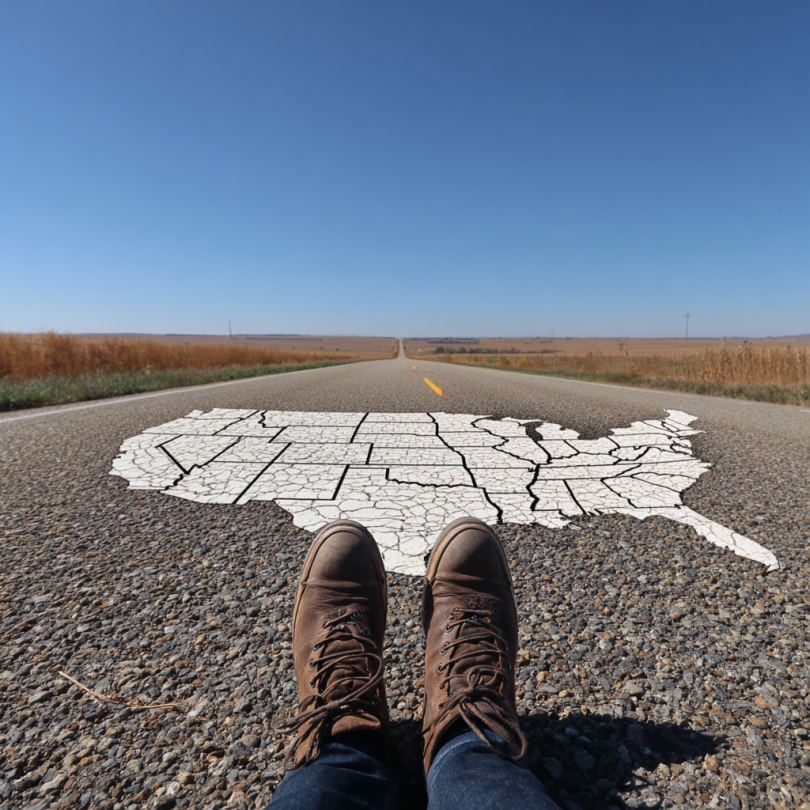
The United States is massive — over 3.7 million square miles. To put that in perspective: it’s roughly the size of Europe without Russia. Cities that feel close on a map may take hours of driving or a short flight to reach.
City Distances That Surprise
New York → Washington, D.C.: ~4 hours by car (~225 miles)
Los Angeles → San Francisco: ~6–7 hours (~380 miles)
Chicago → Detroit: ~4 hours (~280 miles)
Miami → Orlando: ~4 hours (~230 miles)
Tourist Mistake Alert: Assuming distances in miles or kilometers translate to short travel times. Traffic, road conditions, and stopovers add time.
2. Road Trips: The Classic Way to See America
Driving is part of the American experience, but only if you plan realistically.
Highways and Interstates
Interstate system: Efficient and extensive, connecting most major cities.
Speed limits: Typically 55–75 mph (90–120 km/h). Some rural highways can be faster; urban areas are slower.
Pit stops: Gas stations, diners, and rest areas are spaced out — plan fuel and bathroom breaks.
Essential Road Trip Tips
Plan driving segments: 4–6 hours per day is reasonable. Longer drives lead to exhaustion.
Pack snacks and water: Especially in remote areas like deserts or national parks.
Check road conditions: Snow, construction, and closures can add hours.
Rent a comfortable car: You’ll thank yourself after 6–8 hours on the road.
Quick Tip: Flying may be faster for long distances. For example, New York → Los Angeles by car is ~40+ hours, but only 6 hours by plane.
3. Flights Within the USA
Domestic flights are often the most practical solution for covering huge distances quickly.
Popular Domestic Routes
New York → San Francisco: ~6 hours direct
Chicago → Miami: ~3 hours direct
Seattle → Las Vegas: ~2.5 hours direct
Booking Tips
Budget airlines like Southwest, Spirit, or JetBlue can save money but watch for fees.
Airports can be far from city centers, so factor in transport time.
Check if luggage fees are included; domestic baggage rules differ from international flights.
4. Urban Sprawl: Cities Are Bigger Than You Think
Even within cities, distances can be deceiving. Many American cities are spread out, unlike compact European cities.
Examples of Sprawl
Los Angeles: Downtown to Santa Monica = ~30 miles (~1–1.5 hours drive)
Houston: Downtown to Museum District = ~5 miles (~20–30 minutes drive)
Atlanta: Hartsfield-Jackson Airport to city center = ~10 miles (~30–40 minutes drive in traffic)
Tourist Mistake Alert: Thinking you can walk between neighborhoods in major U.S. cities. Public transport exists but may not reach every area. A rental car, rideshare, or bike may be necessary.
5. National Parks and Natural Wonders
The U.S. is full of landscapes worth seeing, but distances between parks are often longer than expected.
Examples
Grand Canyon → Zion National Park: ~280 miles (~5 hours drive)
Yellowstone → Mount Rushmore: ~400 miles (~7–8 hours drive)
Yosemite → Lake Tahoe: ~200 miles (~4–5 hours drive)
Tip: Don’t underestimate travel time in national parks. Roads wind through mountains, and viewpoints encourage multiple stops.
6. Time Zones: A Hidden Factor
Crossing the U.S. can also mean crossing time zones. There are six main continental time zones: Eastern, Central, Mountain, Pacific, Alaska, and Hawaii-Aleutian.
Example: New York (Eastern) → Los Angeles (Pacific) = 3-hour difference
Flights may seem short on paper but factor in time changes for planning sightseeing.
Tourist Mistake Alert: Booking tours or dinner reservations without accounting for time zone differences.
7. Practical Tips for Surviving USA Size Shock
Plan realistically: Don’t try to see the East Coast, West Coast, and Midwest in one trip.
Focus on regions: Pick one or two states or cities to explore in depth.
Use local apps: Google Maps, Waze, or Rome2Rio help estimate travel times more accurately.
Check public holidays: Travel can be slower during Thanksgiving, Christmas, or summer vacation weeks.
Be prepared for long waits: Airports, traffic, and border crossings can add hours unexpectedly.
8. Roadside Culture and Pit Stops
One of the joys of traveling long distances in the U.S. is the quirky roadside culture:
Diners with oversized pancakes
Gas stations with snacks and memorabilia
Small towns with local festivals or murals
Embrace these moments — they break up long drives and give your trip personality.
9. Common Tourist Mistakes
Assuming Europe-style compact distances: One hour by car can easily feel like half a day.
Ignoring traffic: Urban areas like LA, Boston, and DC have notorious rush hours.
Underestimating park distances: Trails and viewpoints are spread out.
Expecting continuous public transport: Many cities are car-dependent.
Overplanning: More stops = more stress; fewer stops = more enjoyment.
The U.S. is a land of extremes: massive cities, long highways, sprawling national parks, and distances that make your watch feel irrelevant. The secret to enjoying it is planning wisely, pacing yourself, and embracing the scale rather than fighting it.
Focus on regions, not the entire country in one trip.
Mix flights and drives strategically.
Leave space for spontaneous stops and roadside discoveries.
Accept that even with two weeks, you won’t see everything — and that’s okay.
Once you adjust to the scale, the size becomes part of the adventure. From coastlines to deserts, mountains to bustling downtowns, the U.S. rewards patience, curiosity, and a flexible itinerary.
Traveling the United States is less about ticking boxes and more about absorbing the variety, landscapes, and endless possibilities. And when you finally cross a state line after a long drive, you’ll understand why Americans measure everything in miles, not minutes.